THE DEATH OF THE JOB TITLE: WHY 2026 IS THE YEAR OF SKILLS
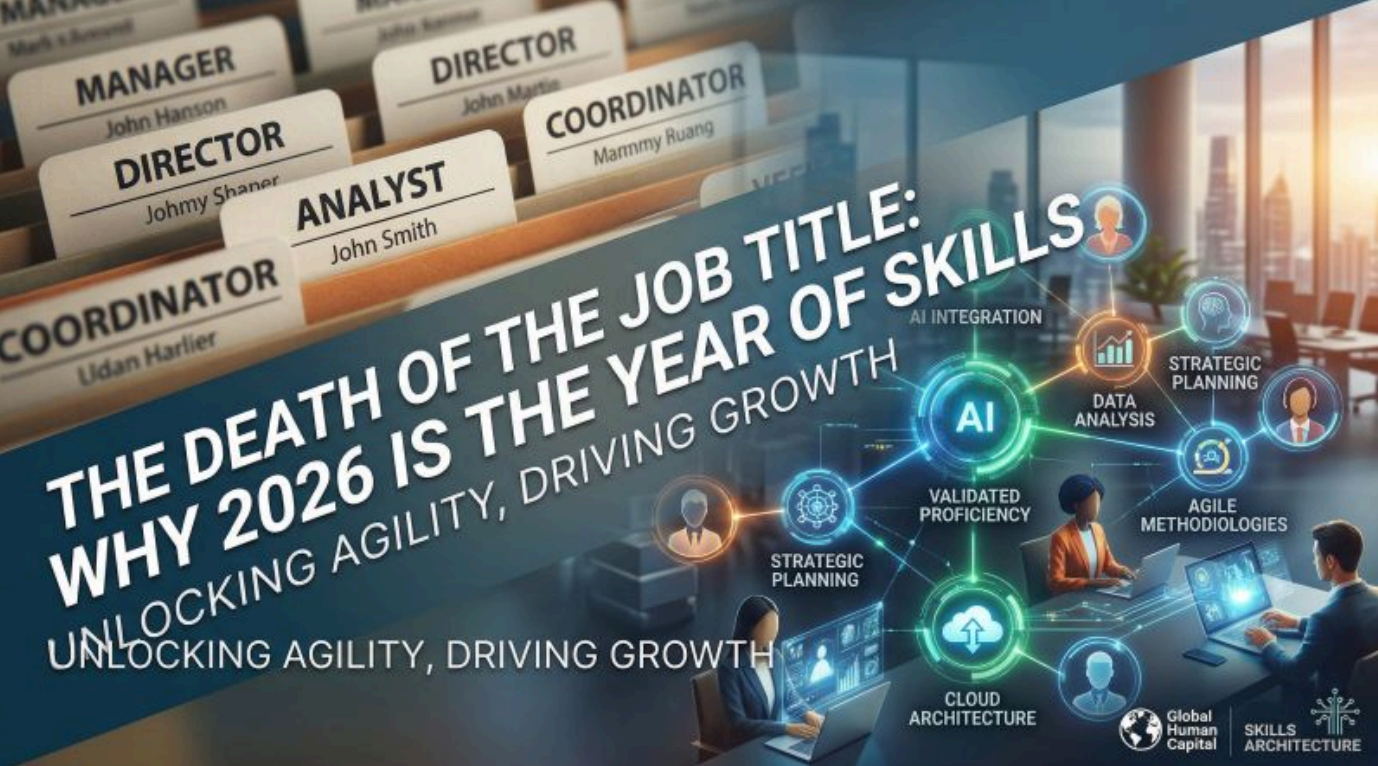
The Death of the Job Title
The Observation:
Large-scale enterprises operating across diverse markets are hitting a wall. The old way of structuring a company—built on rigid role definitions—is failing because it cannot keep up with the speed of technical shifts. We are seeing the traditional business growth cycles compress so rapidly that static planning is no longer a safety net; it is a bottleneck. Organizations now need to move toward a more fluid orchestration of their people if they want to remain competitive.
The Analysis:
The primary risk today is that when workforce planning relies on a job title rather than actual, verified ability, agility disappears and execution risk skyrockets. I have seen this play out during major digital transformations. If you reassign people based on what their previous title says they do, rather than what they are actually capable of doing, you get a massive drop in productivity and major disruptions in delivery. The solution is a fundamental shift toward the Skills-Based Organization. This is an operating model built entirely around capabilities. When you map out what people can actually do, you can align work allocation, internal moves, and training investments with the reality of your workforce.
The Tactical Step:
For leaders looking to make this move, the first step is building a skills inventory that separates what people say they can do from their actual, validated proficiency. You need to integrate this intelligence into your talent systems so that work is assigned based on quantified ability, not rigid department lines. Finally, we need to stop thinking about linear career ladders. Instead, focus on mobility pathways that use skill adjacency. This not only helps keep your best people but significantly reduces the constant pressure to hire from the outside.
A Question for the Network:
As the pace of change continues to accelerate, is your organization still trapped in planning around static job titles, or have you started the transition to a dynamic, skills-based architecture?
#FutureOfWork #HumanCapital2026 #TalentManagement #SkillsBasedOrganization #Leadership
References:
iMocha: Enterprise Skills-Based Organization Guide (2026)
Deloitte: 2026 Global Human Capital Trends
© 2026 Gnaedinger Consultancy. All rights reserved.
