THE HIDDEN HAND IN THE STRAIT: WHY YOUR RISK MODELS ARE OBSOLETE
The Hidden Hand in the Strait
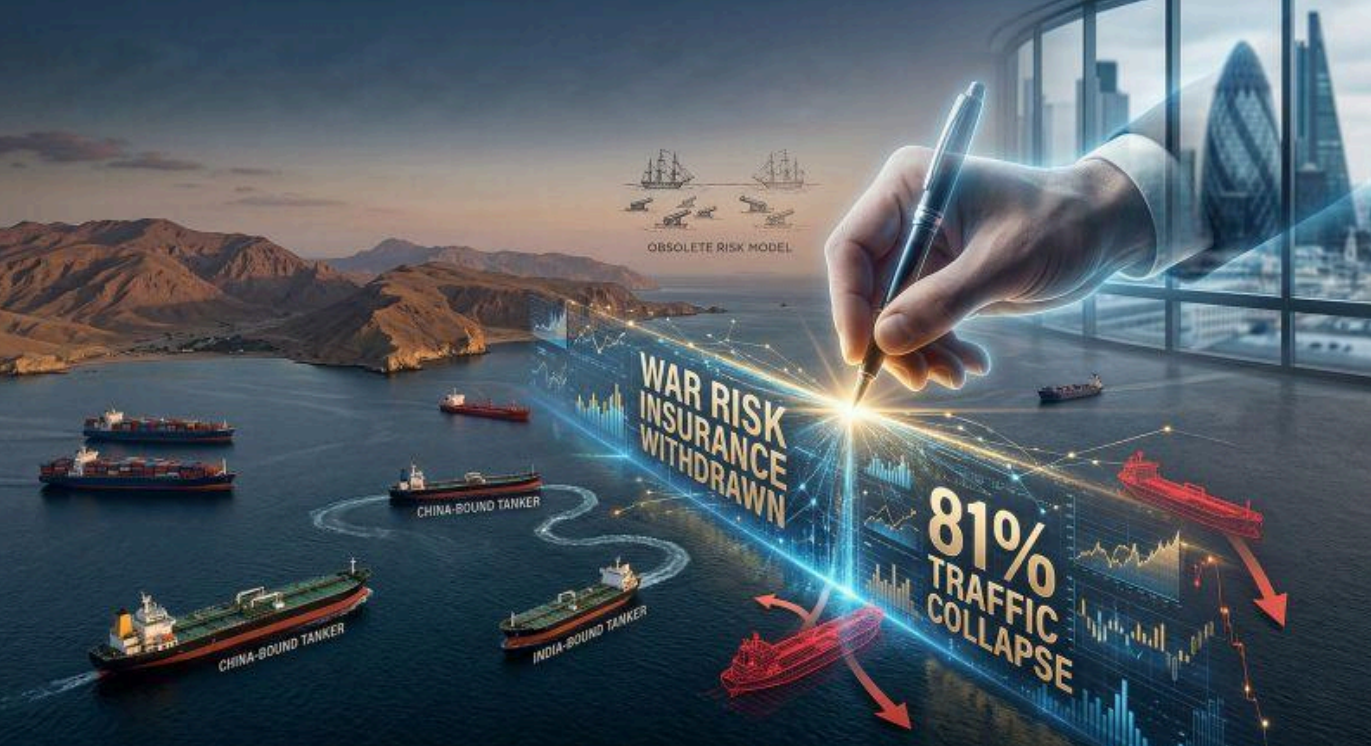
Everyone is watching the horizon for warships in the Strait of Hormuz, but they are looking at the wrong battlefield. The real shutdown isn't happening in the water; it's happening in the high-rise boardrooms of the City of London.
For the first time in over three centuries, Lloyd’s has pulled the plug on war risk coverage. Think about that. 337 years of historical resilience, gone in a afternoon. That single administrative pen-stroke collapsed traffic by 81 percent almost instantly. We don't need a naval blockade when the insurance markets can simply delete the industry's permission to operate.
What the Headlines Are Missing:
The panic about a physical closure is largely noise. If you look at the actual movement of tankers to China and India, the ships are still sailing. The crisis isn't a lack of access; it's a brutal geopolitical fight over who controls the price of oil.
When insurance is withdrawn, the cost of transit doesn't just go up—it becomes a barrier to entry. This "financial premium" is the new blockade. It is silent, invisible, and far more effective than a line of frigates. While this happens, the US is playing a different game, unsanctioning specific reserves and building bypasses to these old financial chokepoints.
A Measured Response:
In 40 years of senior management, I have seen plenty of tactical panics. The mistake now would be to treat this as a temporary shipping delay. It is a fundamental shift in how global risk is priced. Stop waiting for a physical "all clear." It isn't coming because the barrier isn't physical.
Get granular with your contracts. You need to know exactly where your war-risk exclusions sit before the next cancellation notice hits your desk.
Diversify the route, not just the supplier. If your entire strategy relies on an insurance monopoly in London, you don't have a strategy; you have a vulnerability.
We have to account for the skyrocketing cost of maritime trust. How is your team actually adjusting the math in your risk models to handle an 80 percent drop in traffic that has nothing to do with naval hardware?
References:
Promethean Updates: PANIC: Iran Folds as Trump Cuts London's Hidden Hand Over Global Oil
Gibson Dunn: Commercial and Supply Chain Implications of the Gulf Conflict: Shipping, Contracts, and Insurance
#SupplyChain #Geopolitics2026 #EnergyCrisis #RiskManagement #Logistics #Hormuz
© 2026 Gnaedinger Consultancy All rights reserved
