THE HARIBO ERP SUPPLY CHAIN COLLAPSE
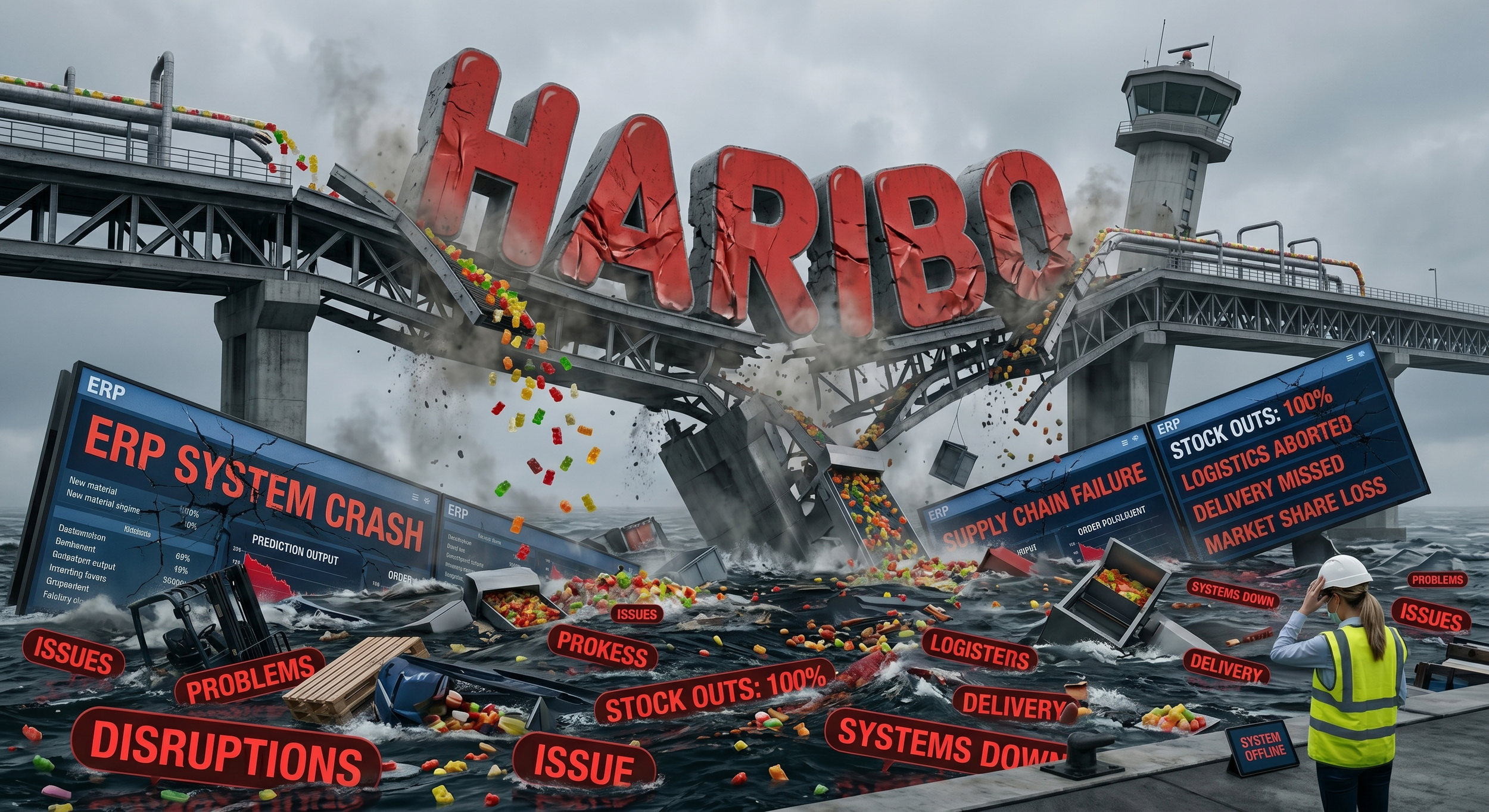
Haribo Disaster
THE OBSERVATION
Haribo tried to overhaul its entire global engine by moving 16 factories to a new ERP system all at once. It was a disaster. Almost as soon as they flipped the switch, production ground to a halt and they started missing supermarket deliveries across ten countries. By the time the dust settled, sales had cratered by 25 percent for the year. The reality of a bad rollout is a lot grittier than the pitch deck.
THE ANALYSIS
This disaster originated from a refusal to prepare the groundwork. Haribo relied on regional systems dating back to the 1980s and severely underestimated the manual effort required to prepare workflows for new software. They discovered their existing business processes were broken and incompatible with the new platform only after they went live. Implementing new software without first engaging in rigorous business process reengineering guarantees operational distress.
THE CHECKLIST
Haribo basically tried to hotwire a modern tech stack onto a 40-year-old mess. They were running on regional systems from the 80s and somehow thought they could just swap the engine while the car was doing 90 on the highway. They didn't do the prep. They didn't audit their workflows. So, naturally, they hit "Go Live" and the whole thing snapped because the new platform couldn't talk to their outdated, broken processes. You can't just pave over a swamp and expect the road to hold. If the internal logic is junk, the software is just going to amplify the failure.
QUESTION FOR THE NETWORK
Let's be real. Are you actually fixing the rot in your workflows before the migration, or are you just praying that expensive new software will somehow act as a magic band-aid?
Hint: If you digitize a mess, all you get is a faster, more expensive mess.
#SupplyChain #OperationalExcellence #RiskManagement #ERP #BusinessStrategy
REFERENCES Panorama Consulting: 5 Lessons Learned From The Haribo ERP Failure.
© 2026 Gnaedinger Consultancy. All rights reserved.
