BEYOND THE JUST-IN-TIME ERA: SHIFTING FROM PURE EFFICIENCY TO TRUE SUPPLY CHAIN RESILIENCE IN 2026
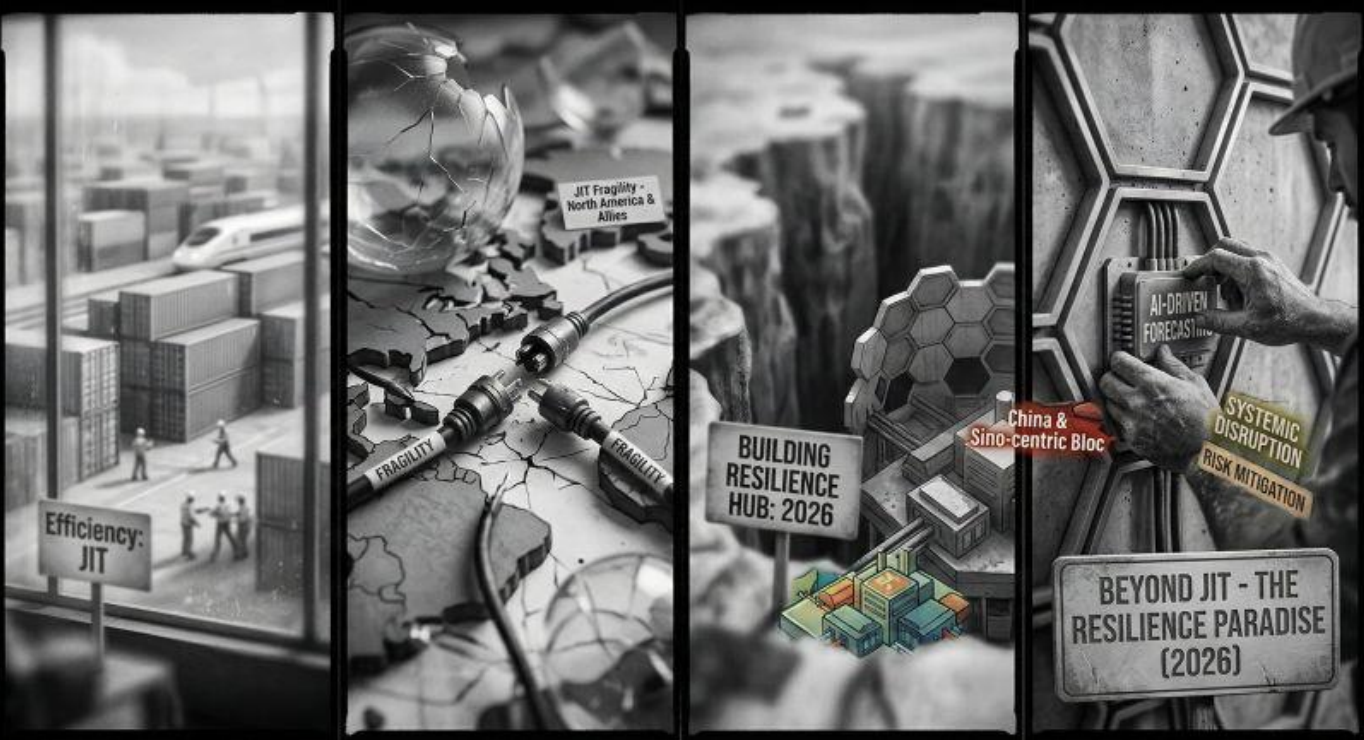
Beyond the JIT Era
The Observation:
In 2026, the global supply chain landscape is undergoing a fundamental recalibration. For decades, supply chain management was largely driven by cost and cash flow efficiency, prioritizing fragile just-in-time models. Today, relentless volatility, from geopolitical tensions to climate-driven disruptions, has exposed the limits of these lean, opaque networks. Resilience is no longer a buzz word, it is a core operating requirement, marking the end of the era defined exclusively by strong globalization and theoretical cost minimums.
The Analysis:
Organizations are realizing that a supply chain built solely for efficiency fails under pressure. The relentless pursuit of the lowest costs has tipped, and the focus is now shifting toward long-term value creation and reliability. Companies are actively moving away from single-source dependencies and optimizing for robustness over pure optimization. This includes building redundancy, adopting flexible intermodal transport options as risk-management tools, and leveraging applied AI and digital twins to test disruptions before they occur. Ultimately, the ability to adapt and recover quickly from shocks now heavily outweighs traditional cost advantages, as reliability in production and delivery becomes the ultimate competitive differentiator.
The Tactical Step:
Leaders must intentionally redesign their networks to balance cost with agility. This means accepting that slightly higher operational costs, such as strategic inventory buffers or geographically diversified supplier bases, are necessary investments in organizational stability. Transition your focus from tracking mere cost efficiency to measuring value creation and continuous adaptivity. Incorporate advanced scenario modeling and network analytics into your operational planning to identify infrastructure constraints and vulnerabilities early. By championing a model that is both lean where possible and resilient where necessary, you protect your supply chain from localized shocks while driving sustainable growth.
Question for the Network:
As the industry shifts from prioritizing pure cost efficiency to valuing true operational reliability, how is your organization balancing the need for lean operations with the necessity of strategic redundancy?
#SupplyChain #SupplyChainResilience #RiskManagement #Logistics #FutureOfTrade
References:
Deloitte: 2026 Global Human Capital Trends
ING: Global Trade in 2026
Rhenus: Seven Global Supply Chain Trends Shaping 2026
Journal of Research in International Business and Management: Global Supply Chain Resilience
© 2026 Gnaedinger Consultancy. All rights reserved.
